
How a Criminal Defense Attorney in Gwinnett County Can Help Get Your Charges Dismissed
Key Takeaways: Yes, a lawyer can help get criminal charges dismissed in Georgia through legal strategies including diversion programs, procedural challenges, and prosecutorial negotiations. Georgia law provides multiple pathways to dismissal that many defendants don’t know about, from conditional discharge for first-time offenders to speedy trial demands. The right defense attorney identifies which strategy fits your case and pursues it aggressively.
If you were arrested in Gwinnett County or the greater Atlanta metro area, you’re probably wondering whether your charges could be dropped. The short answer is yes. While no attorney can guarantee a specific outcome, Georgia law offers several concrete mechanisms that a defense lawyer can use to pursue dismissal of criminal charges. Winning at trial isn’t the only path forward. In fact, fewer than 1% of federal criminal defendants were acquitted at trial in fiscal year 2022, which is why experienced defense attorneys focus heavily on pre-trial strategies designed to get charges reduced or dismissed before a case reaches a jury.
If you’re facing criminal charges and need help now, Tailor Law P.C. is ready to listen. Call 404-703-9797 or reach out to schedule a consultation today.
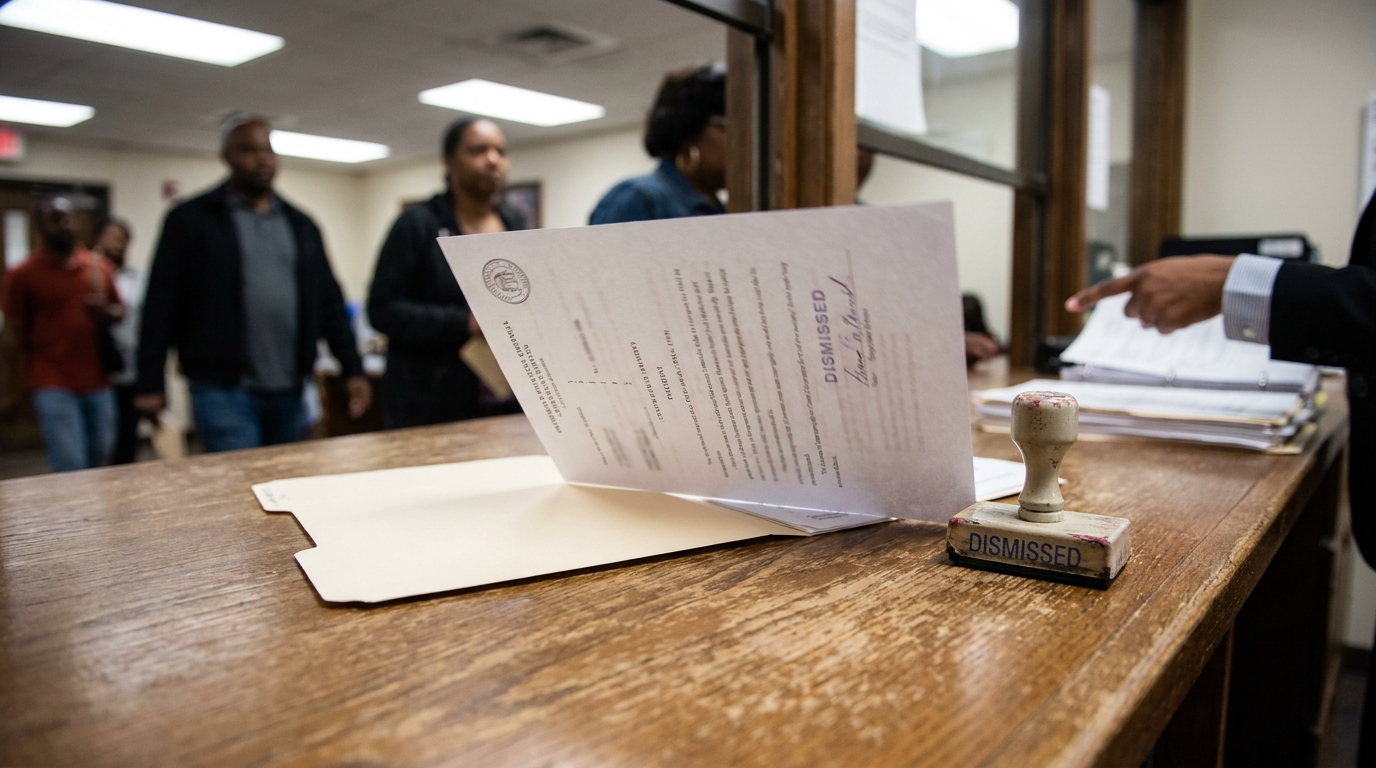
Georgia’s Diversion Programs: A Direct Path to Dismissal
Georgia offers diversion programs that can lead directly to dismissal of criminal charges for qualifying defendants. These programs are designed primarily for first-time offenders charged with certain crimes. If you successfully complete the program requirements, the charges against you may be dismissed entirely.
Defendants who complete qualifying drug court, mental health treatment, or veterans treatment programs can have their charges dismissed or nolle prossed. Records from cases dismissed after successful completion are automatically restricted by the Georgia Crime Information Center, provided the defendant was not arrested for any offense during the program (excluding nonserious traffic offenses), meaning the charge may not follow you on background checks.
💡 Pro Tip: If you’ve never been convicted of a crime, ask your attorney specifically about diversion eligibility. Many people who qualify never learn about these programs without a lawyer advocating on their behalf.
Conditional Discharge for First-Time Drug Offenses
How GA § 16-13-2 Can Lead to Dismissal
Georgia law provides a conditional discharge mechanism for first-time drug possession charges under GA § 16-13-2. If you have no prior drug convictions, the court may defer judgment, place you on probation, and ultimately discharge you and dismiss the case when you complete probation terms. This dismissal doesn’t count as a conviction and cannot be used to disqualify you from employment.
Conditional Discharge for Addiction-Related Property Crimes
This pathway extends beyond drug offenses. Under GA § 16-13-2(c), first-time nonviolent property crime defendants whose offenses were related to addiction may also qualify for dismissal after completing a court-approved drug treatment program and making full restitution to all victims.
💡 Pro Tip: Drug possession charges in Georgia can range from misdemeanor to felony depending on the substance and quantity. An attorney can help you understand what you’re actually facing.
Challenging the Prosecution’s Case Through Discovery and Procedural Strategies
One of the most effective things a criminal defense attorney does is scrutinize every piece of the prosecution’s case. Discovery is the formal process through which your attorney obtains information about the evidence against you. Georgia law under GA § 17-16-4(a)(2)-(3) requires the prosecuting attorney to furnish the defendant with a copy of their criminal history record no later than ten days before trial and allow the defense to inspect all documents, photographs, recordings, and tangible objects the prosecution intends to use.
When prosecutors fail to comply with these disclosure requirements, your attorney can file motions to suppress or exclude evidence. This can significantly weaken the state’s case and, in some circumstances, lead to dismissal. Your Gwinnett County defense attorney should also investigate whether any key officers involved in your arrest appear on a Giglio list. Federal constitutional law (Brady v. Maryland and Giglio v. United States) and Georgia’s Rules of Professional Conduct (R.P.C. 3.8) require prosecutors to disclose when a peace officer’s credibility has been formally called into question (for example, when an officer appears on a Giglio list); this obligation is not specifically codified in O.C.G.A. § 15-18-33(f). If the state’s case relies heavily on testimony from an officer on that list, it can create a serious weakness that supports arguments for dismissal.
💡 Pro Tip: Don’t assume the prosecution’s case is airtight just because you were arrested. Arrests are based on probable cause, which is a much lower standard than proof beyond a reasonable doubt.
Nolle Prosequi: When the Prosecutor Drops Charges
A prosecutor can formally decline to continue prosecuting criminal charges through a legal action called a nolle prosequi. Under GA § 17-8-3, after examining the case in open court and before submission to a jury, a prosecuting attorney may enter a nolle prosequi with court consent. The prosecutor must then notify the defendant and their attorney within 30 days. A nolle prosequi is not an acquittal, and the prosecutor may refile charges later if the statute of limitations has not expired. A defense attorney plays a critical role in building a case that persuades the prosecutor to take this step through presenting evidence of innocence, demonstrating insufficient evidence, or negotiating on behalf of the client.
| Dismissal Strategy | Who It May Help | Key Requirement |
|---|---|---|
| Diversion Program | First-time offenders for certain crimes | Successful program completion |
| Conditional Discharge (GA § 16-13-2) | First-time drug possession defendants | No prior drug convictions; complete probation |
| Property Crime Discharge (GA § 16-13-2(c)) | First-time nonviolent property crime defendants with addiction | Full restitution plus treatment completion |
| Nolle Prosequi (GA § 17-8-3) | Any defendant where evidence is weak | Prosecutor agreement, court consent |
| Speedy Trial Demand (GA § 17-7-170) | Non-capital defendants not tried within required terms | Formal demand filed; juries impaneled at both terms |
| Prosecutorial Misconduct (GA § 17-11-6) | Defendants affected by improper prosecutor conduct | Court finds disqualifying misconduct |
Using the Speedy Trial Demand to Force a Dismissal
Georgia law gives defendants charged with non-capital offenses a powerful procedural tool called the Demand for Speedy Trial. Under GA § 17-7-170, any defendant against whom a true bill of indictment or accusation has been filed for an offense not affecting the defendant’s life may enter a demand for speedy trial. If the state doesn’t try the defendant when the demand is made or at the next succeeding regular court term, and juries were impaneled and qualified to try the defendant at both terms, the defendant must be absolutely discharged and acquitted of the charges. However, a defendant’s own actions, such as requesting a continuance, can waive the demand.
Filing this demand is a strategic decision requiring careful timing. A criminal defense attorney in Gwinnett County who understands the local court calendar can file this demand at the right moment to put maximum pressure on the prosecution. If the state isn’t ready to go to trial, this strategy can result in complete dismissal. However, many prosecutors treat a filed speedy trial demand as an end to plea negotiations.
💡 Pro Tip: The speedy trial demand has strict procedural requirements. Filing it incorrectly or at the wrong time can actually hurt your case. This is not a do-it-yourself strategy.
Prosecutorial Misconduct and Post-Conviction Relief
Georgia law recognizes that prosecutorial misconduct can itself be grounds for dismissal. Under GA § 17-11-6(a), if a prosecuting attorney is disqualified due to improper conduct and the case is subsequently dismissed, the defendant is entitled to recover all reasonable attorney’s fees and costs incurred in defending the case. Under GA § 17-22-12, when a court enters a dismissal or judgment of acquittal because a defendant’s conviction has been overturned, vacated, or reversed, the court must formally notify the defendant of their rights under Georgia’s wrongful conviction compensation chapter.
The Arraignment: Early Opportunities for Your Defense
The earlier you have an attorney involved, the more options are available. An arraignment is the formal hearing where you enter your plea of guilty or not guilty. Having legal representation at this stage is critical because the decisions made here shape the rest of your case. For felony charges heard in Gwinnett County Superior Court, a grand jury reviews the evidence before deciding whether to issue an indictment. Your defense attorney can challenge the sufficiency of that evidence and begin building a strategy toward dismissal from the start.
Whether you’re facing charges in Barrow County, Walton County, or Clarke County, the same Georgia statutes apply. You can read more about defense strategies on our criminal defense blog.
💡 Pro Tip: Write down everything you remember about your arrest and the events leading up to it as soon as possible. Details fade quickly, and this information can make a real difference in how your case is handled.
Frequently Asked Questions
1. Can charges be dismissed without going to trial in Georgia?
Yes. Georgia law provides several pre-trial pathways to dismissal, including diversion programs for first-time offenders, conditional discharge under GA § 16-13-2, nolle prosequi by the prosecutor, and the speedy trial demand under GA § 17-7-170.
2. What is a nolle prosequi, and how does it help me?
A nolle prosequi is a formal decision by the prosecutor to drop charges before the case goes to a jury. It requires court consent but isn’t an acquittal, the prosecutor may refile charges if the statute of limitations has not expired.
3. Will a dismissed charge still show up on my record in Georgia?
Records from charges dismissed after completion of a drug court, mental health, or veterans treatment program are automatically restricted by the Georgia Crime Information Center provided the defendant was not arrested for any offense during the program (excluding nonserious traffic offenses). For other dismissals, you may need to pursue record restriction separately.
4. What happens if I qualify for conditional discharge under GA § 16-13-2?
If you have no prior drug convictions and the court grants conditional discharge, you’ll be placed on probation. Upon successful completion, the court will discharge you and dismiss the case. This dismissal isn’t considered a conviction and generally cannot be held against you in employment decisions.
5. How quickly should I hire an attorney after being arrested?
As soon as possible. Early involvement allows your attorney to challenge evidence, explore diversion options, and make strategic decisions at your arraignment that can shape the entire outcome of your case.
Protecting Your Future Starts With the Right Defense
Criminal charges don’t have to define your future. Georgia law provides real, meaningful pathways to dismissal, but accessing them requires an attorney who knows where to look and how to act. From conditional discharge programs to speedy trial demands, every strategy depends on the specific facts of your case and the skill of the person advocating for you.
Tailor Law P.C. is here to fight for you. Call 404-703-9797 to speak with a criminal defense attorney in Gwinnett County, or contact us today for a free consultation.